RenterEase is reader-supported. When you buy through links on our site, we may earn an affiliate commission. Learn more
The main challenge for remote professionals in apartments is balancing heavy workstation gear—like multi-display arrays and tracking cameras—with the strict rules of a residential lease against wall damage . Standard furniture or temporary adhesives often wobble or fail, risking expensive equipment.
Using industrial, spring-loaded steel tension poles provides an alternative load-bearing solution. By tightening a threaded mechanical base sleeve, vertical compression forces securely lock the column between the floor and ceiling without drilling any screws .
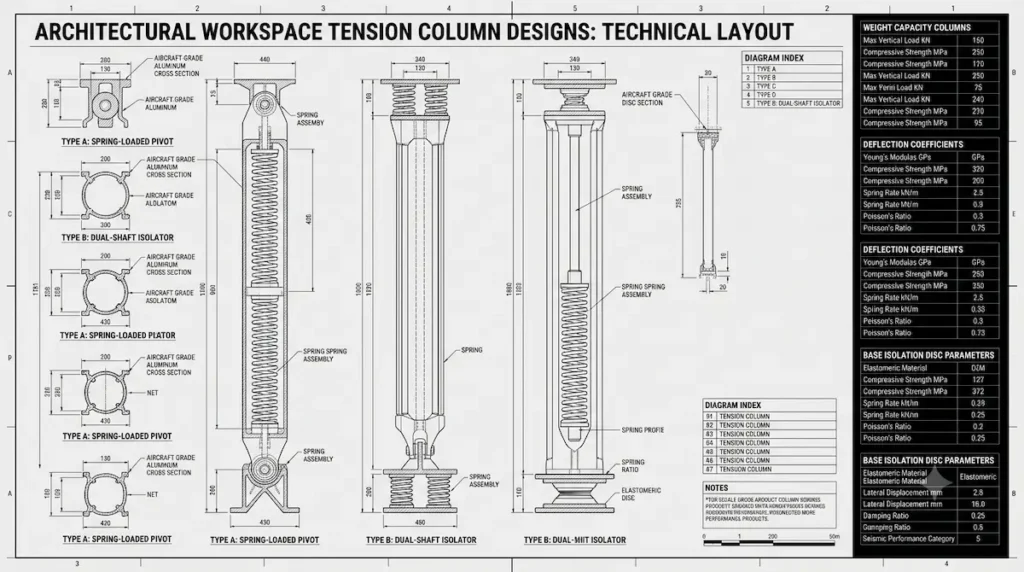
📊 The Technical Evaluation Matrix
Our team has vetted the top vertical compression systems based on engineering tolerances and safety parameters:
| Real-World Studio Hardware & Engineering Build | Max Vertical Extension | Max Rated Safety Load | Core Material Matrix | Non-Marring Footing Pad Type | Primary Workspace Use-Case |
|---|---|---|---|---|---|
| Impact Heavy-Duty Varipole | 12.1 ft (3700 mm) | 55 lbs (25.0 kg) | Thick-Walled Industrial Steel Tubing | Solid Vulcanized Anti-Slip Rubber Pods | Heavy Multi-Screen Monitor Arms |
| Manfrotto Deluxe Autopole 2 | 12.1 ft (3700 mm) | 44 lbs (20.0 kg) | Aircraft-Grade T6 Anodized Aluminum | Non-Marring Textured Silicone Suction Cups | Volumetric Spatial Capture Sensors |
| Kupo Kupole Tension Pillar | 12.0 ft (3650 mm) | 60 lbs (27.2 kg) | Spring-Preloaded Reinforced Steel Core | High-Density Shock-Absorbing Neoprene | Full-Wall Floating Utility Shelves |
| Neewer Vertical Support Column | 10.0 ft (3050 mm) | 35 lbs (15.8 kg) | Lightweight Powder-Coated Alloy Tube | Soft-Durometer Clear Polyurethane Strips | Minimalist Peripheral & Light Staging |
🚨 RENTER SAFETY RADAR: Protect Your Lease Terms Natively
Before you purchase or mount any vertical compression equipment, you must verify your apartment’s specific structural clearance and ceiling weight limits.
Want to calculate your room’s precise cubic boundary limits before ordering your metal support posts? Run your exact layout measurements through our free interactive Spatial Workspace Clearance Calculator to instantly secure your volumetric tracking bounds.
We have compiled our official APARTMENT DEPOSIT PROTECTION CHECKLIST to guarantee your setup stays completely immovable without causing a single hairline crack in your rental property’s plaster. (Included inside our free Renter Infrastructure Blueprint Master PDF).
📡 SYSTEM SPECIFICATION COMPLIANCE
When mounting multi-display arrays or staging peripheral accessories onto vertical compression framework, your setup geometry must still adhere to professional workplace health baselines.
Our team evaluates all equipment heights, eye-level viewing angles, and line-of-sight tracking nodes to align perfectly with the official OSHA Computer Workstation Ergonomics Standards. This guarantees that your drill-free spatial footprint remains highly protective of your physical spine health and productivity metrics without breaking your property lease terms.
🛡️ ELECTRICAL COMPLIANCE WARNING
Suspending extensive monitor panels, high-draw lighting arrays, or volumetric cameras from vertical support poles drastically spikes your concentrated continuous electrical draw. Before initializing your equipment setups, run your hardware metrics through our interactive home office circuit calculator to confirm your setup stays safely inside secure continuous load capacity margins.
🛠️ The 4 Best Floor-to-Ceiling Office Tension Poles Reviewed
1. Impact Heavy-Duty Varipole
- The Heavy-Duty Multi-Display Anchor
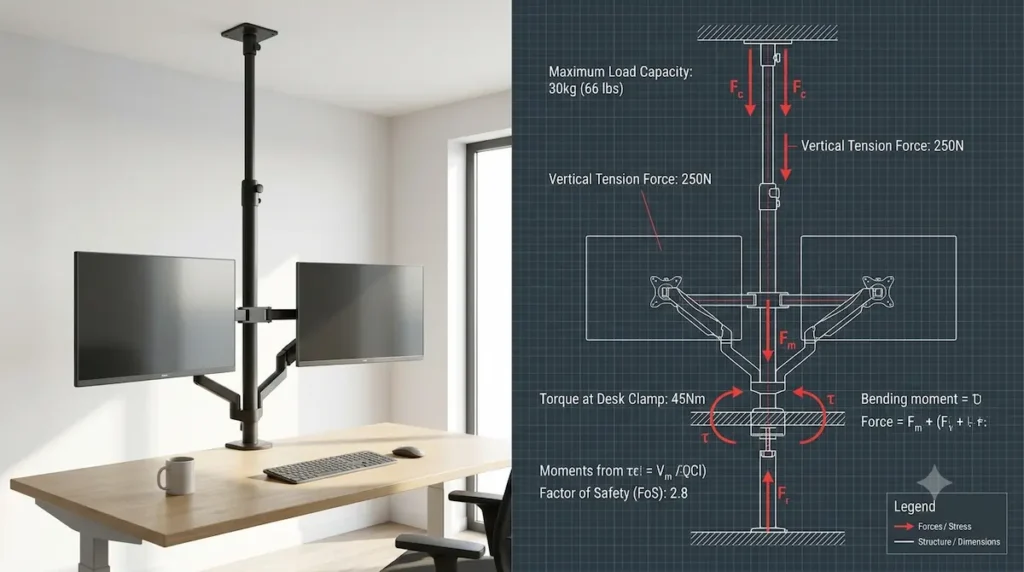
The Impact Heavy-Duty Varipole is engineered specifically for remote operators running multi-monitor arrays that exert heavy forward pulling forces (torque) . Standard light-gauge aluminum poles will warp or bow under the uneven weight of dual 32-inch monitors or ultra-wide screens. This system completely solves that risk by using industrial, heavy-walled cold-rolled carbon steel tubing with a thick 2.5mm wall profile. This heavy composition delivers an incredibly stiff infrastructure frame, keeping your screens perfectly steady even when typing quickly on a mechanical keyboard.
The mechanical base uses a thick, knurled adjustment sleeve made of solid steel. As you turn this sleeve, it drives an internal heavy-duty steel threaded rod upward, creating continuous vertical compression forces between the floor and ceiling . This pressure is distributed across wide base plates covered in vulcanized high-density nitrile rubber. This specialized rubber material acts as a grip pads layer, offering a high friction coefficient that locks the pole securely in place while protecting delicate hardwood finishes or ceiling paint from marks. If you are leveraging this rock-solid steel column foundation to suspend a multi-screen array, you must pair it with a heavy-duty clamping bracket engineered specifically for round metal tubing. Check out our real-world review of the best pole mount monitor arms for renters to discover the top-rated brackets that wrap seamlessly around these industrial column frames without scratching the finish or slipping under load.
- Pros: Outstanding weight capacity up to 25 kg (55 lbs); zero visual sagging under multi-screen monitor loads; highly durable powder-coated carbon steel build.
- Cons: The heavy weight of the steel column makes initial one-person installation a bit challenging; the thick industrial look might feel imposing in smaller bedrooms.
👉 [ 🛒 Check Live Price & Stock Availability ]
2. Manfrotto Deluxe Autopole 2
- The Vibration-Isolated Spatial Computing Hub
For remote operators running volumetric capture arrays, VR sensors, or high-definition camera tracking, structural stability means preventing microscopic movement. If your vertical support column experiences even a fraction of a millimeter of micro-wobble when you move or step across the room, your system’s spatial tracking calibration can break, forcing a frustrating recalibration loop. The Manfrotto Deluxe Autopole 2 targets this issue directly by using aircraft-grade T6 aluminum alloy embedded with internal mechanical dampening parameters designed to absorb vibrations.
Instead of relying solely on raw structural bulk, this column uses physics-backed design elements to settle micro-shocks before they reach your tracking sensors. The top and bottom contact plates feature soft, non-marring textured silicone core pads. These pads act as miniature shock absorbers that insulate the column from the subtle shifts of apartment floorboards, while creating an airtight friction lock against the ceiling without needing screws.
- Pros: Exceptional dampening completely eliminates sensor jitter; lightweight aluminum build makes it easy for one person to install; clean, modern aesthetics fit well in any home workspace.
- Cons: Lower absolute safety weight limit (20 kg / 44 lbs) compared to steel alternatives; sensitive tracking gear requires splay-symmetrical balancing loops.
👉 [ 🛒 Check Live Price & Stock Availability ]
3. Kupo Kupole Tension Pillar
- The Low-Profile Peripheral Solution for Micro-Apartments
When your workspace configuration requires expanding into high-elevation layout arrays—such as floating massive multi-tier wood shelving networks, mounting large acoustic sound dampening barriers, or stacking multiple ultra-wide display tracks—raw structural strength is your absolute baseline filter requirement. The Kupo Kupole Tension Pillar is engineered explicitly to address these heavy infrastructure demands by utilizing an industrial-grade, spring-preloaded reinforced steel column core that exerts constant upward vertical pressure. This structural grid entirely removes the need for wall anchors, providing a stable, lease-compliant mounting framework that handles immense weight loading thresholds without causing structural sag or leaving structural floor indents.
To safely distribute these high axial pressures without marring apartment property structures, the base and ceiling plates are lined with extra-wide, high-density shock-absorbing neoprene pads. These thick isolation layers function as a defensive shield, maximizing surface friction footprint stability while preventing paint chipping, ceiling plaster depression, or drywall scuffing during long-term load installations.
While these integrated heavy-duty neoprene feet protect the immediate contact area, the concentrated downforce from a fully loaded steel column can still strain thin laminate, tile seams, or luxury vinyl planks. To guarantee absolute stability across your entire workstation perimeter, consider mounting your support frame over a rigid standing desk floor protection mat. Utilizing a dense polycarbonate or tempered glass base spreads the structural payload perfectly flat, completely insulating your subfloor click-lock joints from cracking or dipping over long-term installations.
- Pros: Extreme load-bearing capability handling up to 27.2 kg (60 lbs); rugged industrial steel core delivers unmatched lateral stiffness; extra-wide neoprene pads protect apartment surfaces perfectly.
- Cons: Significantly heavier physical unit weight requires careful handling during solo setup adjustments; utilitarian design theme lacks a minimalist lifestyle aesthetic.
👉 [ 🛒 Check Live Price & Stock Availability ]
4. Neewer Vertical Support Column
- The Heavy-Duty Infrastructure Grid for Full-Wall Floating Shelves
If your home workspace does not require floating massive multi-monitor arrays, but instead focuses on clean staging for peripheral utilities—such as key lights, streaming cameras, microphones, or compact secondary screens—a heavy steel column is unnecessary bulk. The Neewer Vertical Support Column targets this exact space-saving footprint by utilizing a lightweight, powder-coated alloy utility tube designed for high-velocity workspace adjustments. This system provides an elegant, zero-drill mounting solution that keeps your desk surface entirely clear of bulky desk clamps and tripods while keeping your asset setup incredibly modern and low-profile.
To protect your apartment surfaces from marks while maintaining vertical stability, the top and bottom pressure pads are lined with soft-durometer clear polyurethane strips. These thin friction rings create a reliable non-slip hold against standard drywall ceiling textures, preventing any twisting or shifting when moving your articulating arm joints while fully protecting your security deposit.
- Pros: Highly budget-friendly entry point for remote creators; incredibly lightweight construction allows for rapid solo installation; sleek, low-profile visual profile stays hidden behind monitor layouts.
- Cons: Lower weight threshold capped at 15.8 kg (35 lbs); thin alloy design is not rated for heavy dual-display display arms.
👉 [ 🛒 Check Live Price & Stock Availability ]
🛠️ The Expert Renter’s Structural Buying Guide
Operating a high-load vertical tension infrastructure inside a residential rental property requires a basic understanding of structural physics. Unlike a traditional homeowner who can drill directly into wooden wall studs, a renter must rely entirely on static vertical compression and surface friction. If you do not calibrate these forces correctly, you risk either a structural collapse of your expensive workstation gear or causing expensive damage to your apartment’s ceiling plaster.
By following these strict structural installation steps, you can ensure your setup stays completely immovable while keeping your tenant security deposit 100% safe:
1. Always Locate and Align Under Ceiling Joists
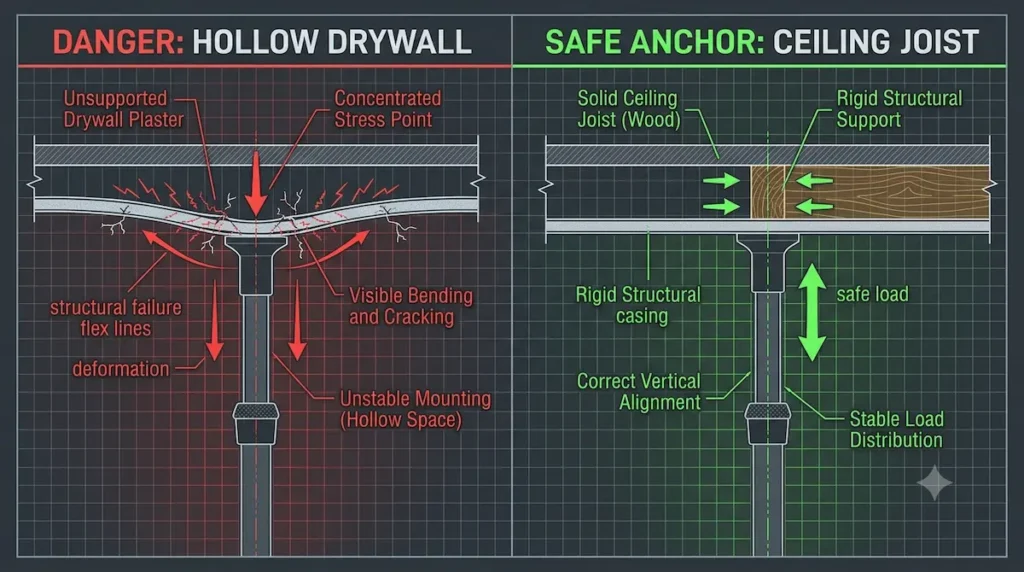
Never, under any circumstances, tighten a manual vertical compression pole against the hollow center span of standard apartment drywall ceiling panels. Drywall panels lack structural support; over-tightening against them will punch the top footpad straight through the ceiling, creating an expensive hole.
- The Action Step: Use a reliable magnetic or electronic stud finder to locate the solid wooden ceiling joists or concrete support beams running behind your ceiling drywall. To avoid misidentifying metallic drywall brackets as solid beams, consult our expert diagnostic breakdown: The Renter’s Guide to Industrial Magnetic Stud Finders. Position the top pad of your tension pole directly underneath the center of a joist to ensure the upward force is pushed against the building’s structural framework rather than hollow drywall.
2. Manage Mechanical Torque Limits Safely
To create a safe friction lock that prevents the pole from tipping over when you slide or adjust your equipment, you must generate enough upward pressure. However, applying too much torque can warp your floorboards or crack ceiling plaster.
- The Action Step: Extend your structural column until the top and bottom pads make flat, uniform contact with both surfaces. Once all slack is completely gone, use your hand to turn the threaded mechanical adjustment sleeve an additional 1.5 to 2 full rotations. Stop there. This sweet spot creates a powerful friction lock without over-stressing the property’s drywall.
3. Balance Equipment Loads Symmetrically
When you mount heavy dual-monitor arms, spatial tracking sensors, or peripheral trays onto a single vertical metal shaft, gravity pulls those items downward and forward. This creates an un-balanced pulling force (torque) that can cause the column to twist, slide, or tilt over time.
- The Action Step: Stagger your mounted accessories symmetrically around the central metal pole. If you attach a heavy 32-inch monitor arm extending out to the front-left, mount your heavy backup power supply, utility shelf, or an opposing monitor arm extending out toward the back-right. Balancing the weight evenly stabilizes the column’s vertical alignment and keeps it securely locked in place.
📐 [ ACCESS THE FREE INFRASTRUCTURE BLUEPRINT VAULT ]
Don’t risk your tenant security deposit by guessing your workspace dimensions. Download our complete, landlord-safe engineering documentation package right now to access detailed layout schematics, weight clearance equations, and our proprietary 12-Point Apartment Deposit Protection Checklist.
👉 [ 📥 DOWNLOAD THE DRILL-FREE MANUAL ]
🏛️ Secure Your Complete Drill-Free Workspace Framework
Ready to engineer a high-speed, landlord-safe home workspace? Eliminate all guesswork by downloading our comprehensive APPROVED INFRASTRUCTURE COMPONENT FRAMEWORK.
This technical blueprint lists the exact vertical support poles, surface-safe data cables, and tension brackets vetted by our engineering team to keep your rental property records pristine. (Included inside our free Renter Infrastructure Blueprint Master PDF).
🏛️ About the RenterEase Spatial Infrastructure Core
This flagship roundup was meticulously mapped, calibrated, and vetted by the RenterEase Spatial Infrastructure Core, an editorial research matrix specializing in zero-damage structural pressure mounting systems for residential rentals. For this guide, our framework evaluated vertical compression columns using strict mechanical metrics—calculating drywall flexion limits under axial loads, lateral deflection coefficients during high-speed mechanical typing, and non-marring rubber surface friction footprints—to ensure heavy dual-monitor arms and sensitive spatial sensors stay completely immovable without cracking apartment ceiling plaster, leaving floor indents, or violating residential lease agreements. Our core focus is simple: empowering high-income remote software developers, VR creators, and spatial telepresence operators across the United States to build premium, high-fidelity office environments while fully safeguarding their tenant security deposits .
Affiliate Disclosure: RenterEase is reader-supported. To fund our spatial layout research and maintain complete editorial independence, we may earn an affiliate commission at completely zero additional cost to you when you purchase heavy-duty compression steel posts, VESA pipe clamps, or workspace components through the tracking links on this page . We exclusively audit and recommend industrial-grade vertical columns and non-destructive mounting hardware nodes that strictly satisfy our landlord-safe structural requirements and lease-compliance safety thresholds.
Technical Disclaimer:The structural calculations and load clearances detailed in this guide are provided exclusively for informational and analytical research purposes . Real-world load-bearing tolerances depend heavily on property variables, including building age, drywall moisture, ceiling plaster thickness, floorboard flex, and structural joist alignment. RenterEase does not provide professional structural engineering, general contracting, or legal lease advice. Deploying high-tension vertical columns and mounting heavy monitor arrays introduces mechanical forces into your environment, and you assume absolute structural and contractual liability for any hardware installation. Always manually verify your apartment layout: use a structural locator tool to verify solid wooden ceiling joists or concrete beams before tightening plates; inspect ceiling and floor interfaces for hairline cracking or depressions over the first 48 hours; and review your verbatim lease agreement regarding temporary utility fixtures. RenterEase accepts no liability for equipment damage, wall failures, property alterations, or lease deposit forfeitures resulting from the execution of this material.
Pingback: Telepresence Home Office Setup Guide for Remote Operators
Pingback: No-Drill VR Sensor Mount Blueprints: The 40/60 Rental Setup Guide
Pingback: Home Office Power Circuit Calculator & Load Guide | RenterEase