RenterEase is reader-supported. When you buy through links on our site, we may earn an affiliate commission. Learn more
Why Electronic Wall Scanners Fail in Modern Rental Apartments
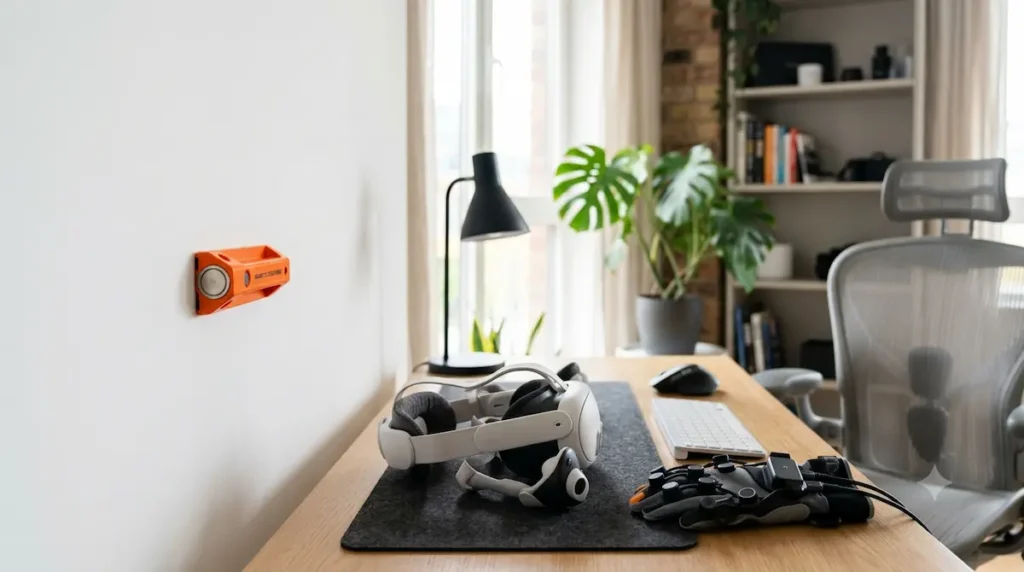
🔊 The Renter’s Reality Check: Anyone who has lived in a modern apartment complex knows the frustration of trying to hang a heavy shelf or mount hardware using a cheap electronic stud finder. You slide it across the drywall, it randomly beeps three different times over the exact same spot, and then flashes a warning light over an empty space. You end up knocking on the wall with your knuckles, completely guessing, hoping to avoid leaving a crumbling hole that ruins your security deposit.
Let’s look at the raw truth: standard capacitive electronic stud finders are notoriously unreliable in modern multi-family apartment blocks . Most commercial rental properties built within the last two decades utilize lightweight building materials, shared drywall barriers, and dense interior utility layouts. When you run an electronic wall scanner across standard 1/2-inch gypsum drywall, its sensors are looking for changes in wall density.
However, in tight apartment layouts, these sensors face a massive hurdle known as “capacitive noise.” Cheap electronic scanners constantly throw false positives. They mistake flexible plastic conduit pipes, low-voltage internet wires, shared water pipes, and metal fire-barrier sheets for structural wall studs. If you trust a blinking red light and attempt to drive a standard structural wood screw into a false positive, you risk puncturing an active utility line or tearing a massive hole in bare plaster board. For high-income spatial computing operators mounting heavy, zero-wobble motion hardware or baseline virtual reality arrays, guessing is a catastrophic risk to your apartment security deposit .
The Physics of Neodymium Detection: The Zero-Error Hardware Blueprint
To completely eliminate the risk of false positives, advanced spatial technicians use a mechanical alternative: the rare-earth Neodymium magnetic stud locator . These tools do not contain batteries or circuit boards, and they don’t try to guess wall density. Instead, they rely on basic physical magnetism to lock directly onto the factory-installed steel drywall screws driven into the wall studs by the building’s contractors.
When an apartment drywall sheet is hung, contractors drive a steel screw through the face of the drywall panel straight into the center of the underlying wood or metal stud track every 12 to 16 inches. A rare-earth magnetic finder uses an ultra-powerful Neodymium magnetic core that actively pulls toward these hidden steel screw heads as you sweep the wall. When the tool encounters a screw, it snaps firmly onto the wall face and hangs there on its own. Because a drywall screw cannot exist in mid-air inside a hollow wall cavity, finding a screw gives you 100% mechanical proof of a structural stud center line. This allows you to map out your apartment’s framing skeleton with zero technical errors.
🧲 Top-Rated Magnetic Stud Finders for Rental Workspaces (2026 Picks)
If you are ready to ditch the frustrating battery-powered scanners and deploy a foolproof physical tracking grid, these two industry-standard tools are the top choices for modern remote workspace setups:
1. The C.H. Hanson 03040 Magnetic Stud Finder
The absolute gold standard of pocket magnetic detection. The C.H. Hanson utilizes a compact, ergonomic plastic body housing two ultra-powerful rare-earth magnets. It features an integrated 2-way bubble vial level, allowing you to not only find the contractor drywall screws but perfectly line up your vertical mounting angles at the exact same time without marking up the paint. It requires zero calibration and fits seamlessly into any basic home tech kit.
2. The StudBuddy Magnetic Stud Finder
A minimalist, ultra-durable tool favored by hardware testing labs across the USA. The StudBuddy features a simple, elongated design that maximizes surface contact area against apartment plasterboard. It lacks extra dials or bubble levels, focusing entirely on a broad magnetic pull that easily sweeps through multiple layers of heavy commercial apartment paint or textured wallpaper coats, snapping instantly onto underlying metal tracks or wood studs.
Tracing Drywall Screws: The 3-Step Dual-Axis Wall Map Routine
Using a Neodymium magnetic locator is dead simple, but mapping a full apartment wall skeleton requires a systematic approach. If you just slide the magnet randomly, you might lock onto an isolated piece of metal—like an old structural protector plate or a rogue utility tack.
Follow this three-step dual-axis routine to map your studs with 100% mechanical certainty:
- The Horizontal Sweep (Locating the Axis): Place the magnetic stud finder flat against the drywall at chest height. Slowly slide it horizontally across the wall face. When the magnet hits a hidden steel drywall screw driven into a stud, it will snap firmly to the wall and hang there on its own. Leave it there.
- The Vertical Verification (Tracing the Column): Take a second magnetic finder (or a small piece of painter’s tape to mark the first spot) and move vertically straight up and down from that initial point. If you lock onto another screw 12 inches above or below it, you have successfully verified a true vertical structural stud line.
- The Grid Calculation: Standard USA residential and commercial framing spaces studs exactly 16 inches or 24 inches apart on center. Measure exactly 16 inches horizontally to the left or right from your verified column, and repeat the sweep. If the magnet snaps into place on that exact measurement line, your wall map is completely locked in. You now know exactly where it is safe to anchor heavy equipment.
What to Do If Your Wall Sweeps Reveal No Wood Studs
What happens if you run your dual-axis sweep and your magnets reveal that your rental apartment uses ultra-thin, light-gauge metal track studs instead of solid timber wood framing? Or worse, what if your apartment layout constraints mean the perfect position for your floating office workspace sits entirely over a completely hollow drywall cavity ?
Do not panic, and absolutely do not risk your security deposit by guessing your installation limits.
If you are forced to mount your heavy hardware setup onto bare plasterboard rows, you can bypass structural studs entirely by leveraging the material physics of high-capacity clamping hardware . Head straight over to our interactive Studless Heavy-Duty Murphy Desk Blueprint right now . Plug your apartment’s exact drywall thickness parameters and desk weight metrics directly into our automated safety calculator to instantly output your zero-damage setup schematic and secure your deposit !
🤖 About RenterEase: The premier digital media asset and structural testing framework built explicitly for the spatial computing era. We engineer zero-damage, high-capacity mounting solutions, material stress diagnostics, and hardware calibration routines for remote VR teleoperators, haptic specialists, and humanoid robotics technicians optimizing high-load home-office environments inside standard rental apartment complexes. We protect your hardware workflow; we secure your security deposit.
Disclaimer: RenterEase is an independent, consumer-supported educational resource. When you click through our verified resource links, we may earn an affiliate commission at absolute zero additional cost to you. The structural observations, calibration routines, and hardware guidelines presented on this platform are for general informational and educational purposes only. Always consult your specific property lease agreements, local building codes, and official tool manufacturer safety manuals before executing any hardware modifications or mounting heavy equipment to apartment walls.